
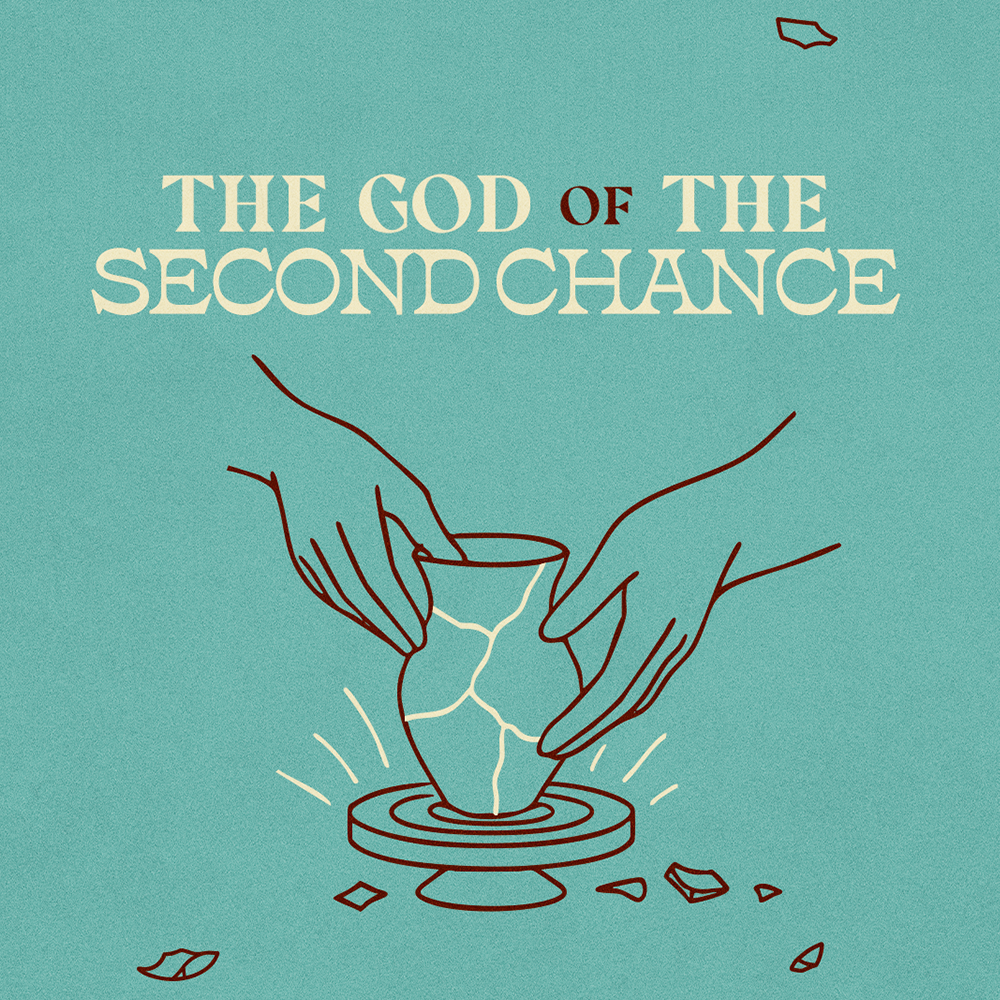
Week 1| God of Second Chances | Woman Caught in Adultery

Merry New year— and welcome to Grace. My name is Scott and in the start of a new year, and I just want to say out loud how grateful I am for the kind of God we serve. We don’t serve a God of one chance. We don’t serve a God who says, “You blew it, and now you’re done.” We serve the God of the second chance, and the third, and the fourth, and if we’re being honest, probably the fifth and sixth too.
And the reason that matters—especially at the beginning of a new year—is simple but profound: God does not deal with us the way people deal with us.
And if you’ve lived any amount of life, you already know how people tend to deal with failure. People keep score. People draw lines. People get tired. People decide they’ve had enough. We confuse the moment for the man and the failure for the future. And whether we realize it or not, we often carry all of that with us when we think about God.
So before we talk about who God is, we need to be honest about who we are. Because yes, you may enter this new year thinking about some good goals for your life. But every one of us walks into a new year carrying something. Something we regret. Something we wish wasn’t there. Something we would undo if we could. Things we said. Things we did. Opportunities we wasted. Relationships we strained. Seasons where we ran, hid, shut down, or checked out.
We might manage it better than we used to. We might hide it more carefully. But it’s still there. And when it’s been there long enough, it starts shaping how we expect God to respond to us.
Because here’s what we do, often without even realizing it: we assume God will respond to us the same way other people have responded to us. We take our experiences with parents, spouses, bosses, coaches, and friends, and we quietly project them onto God.
So when we mess up, we brace ourselves. Not because God has said anything yet, but because we already know how this usually goes with people. And for many of us, that expectation falls into a couple familiar categories.
For some of us, the response we expect is cancelation. One mistake, one bad season, one line crossed, and it feels like we’re done. The relationship is over. The opportunity is gone. The label sticks.
Others of us expect something more conditional. “I’ll give you another chance, but if you ever do this again, I’m finished with you.” So we live on probation, always one failure away from being written off, and we quietly assume God must operate the same way.
For some of us, it’s chastisement. When you mess up, you don’t just hear about it once — you hear about it over and over again. That may have been your experience growing up: You screw up and it wasn’t a conversation, it was a three–hour lecture. Yelling, reminders, shame disguised as discipline. And even now, years later, it’s easy to assume that’s how God deals with failure too — not just correction, but punishment layered with embarrassment. You don’t just do sinful things — you are the sinful thing. And when that’s how people have spoken over you long enough, it’s almost impossible not to assume that’s how God sees you too.
Others of us expect to be categorized. “This is just the kind of person you are.” You’re lazy. You’re irresponsible. You’re a liar. You’ll always struggle with that. You’re a work-a-holic…
And once that label is applied, it starts to feel permanent.And to some extent it becomes a self-fulfilling prophecy laced with all sorts of relational dysfunction.
And then there’s concealment. This one is sneakier. It sounds gentle at first – it’s shame masquerading as grace. Here’s what concealment does- Just ignore it. Don’t talk about it. Let’s pretend everything’s fine and hope things go back to normal. It’s the quickest way to deal with failure or dysfunction.
Some of you experienced this over the holidays. Grandpa blows up at the kids, tension fills the room, and what does Grandma do? She smiles, passes out cookies, and acts like nothing happened. And everyone plays along. But the result is always the same — Grandpa keeps being a grouch master. Because ignoring a problem doesn’t heal it. It just guarantees it repeats.
And for a while, concealment feels nice. It keeps the peace. But eventually you start asking a deeper question: “Okay… but how do I stop being this version of myself? Am I stuck here? Can I actually change. Can this life issue that i’ve kind of run up against over and over actually be dealt with and I can I actually change?”
The truth is our relationships feel the strain of failure and unfaithfulness and fakeness… and we assume that the same way people respond… God responds the same way.
And for someone like me— that presents a real crisis— because I make a lot of mistakes. Which means I need a lot of second chances.
And that’s why I’m so grateful for the true character of Yahweh- the God of the Bible.
This week I spent 30 minutes just doing a speed blast through the entire 66 books of the bible— and you are harder pressed to find examples of someone NOT getting a second chance. All throughout- you see person after person who gets chance after chance with God.
Adam, Cain, Noah, Abraham, Jacob, Joseph, Moses, Aaron, Balaam, Gideon, Samson, Ruth, David, Jonah, Ninevites, Elijah, Pharoah, Ahab and Jezebel, Mephibosheth, David, Gomer, Matthew, Woman at the well, Saul, Peter, Prodigal Son, Older brother, Zaccheus, The paralytic man, the man born blind, the jailer…
When I read Scripture, what I don’t see is a God who cancels people the moment they fail. I see a God who forgives. A God who steps into messes, lifts people out, brushes them off, and sets them back on their feet again. Over and over and over.
And man, I’m so grateful we have a God like that. Maybe you’re not like me. Maybe you don’t need that kind of grace as much as I do. But I do.
And today, I want to show you — from the Bible — that we serve the God of the second chance. And that this isn’t a strategy he just pulls out when he feels generous— it’s baked into the who he is.
Ps 103 (Pg 413)
8 Yahweh is compassionate and gracious, slow to anger, abounding in love.
9 He will not always accuse, nor will he harbor his anger forever;
10 he does not treat us as our sins deserve or repay us according to our iniquities.
11 For as high as the heavens are above the earth, so great is his love for those who fear him;
12 as far as the east is from the west, so far has he removed our transgressions from us.
13 As a father has compassion on his children, so the LORD has compassion on those who fear him;
And what’s fascinating is that Psalm 103 isn’t introducing something new about God. It’s echoing something much older. In Exodus 34, when God reveals His own name—His own character—He says, “the Lord, the Lord, which was literally “Yahweh, Yahweh, the compassionate and gracious God, slow to anger, abounding in love and faithfulness.”
This is God telling Moses, “This is who I am. This is how I operate. This is how I respond to failure.”
God doesn’t cancel. God doesn’t keep you on probation. God doesn’t define you by your worst moment. And God doesn’t pretend sin isn’t real just to keep the peace.
And then David says something so human and so hopeful….
14 for he knows how we are formed, he remembers that we are dust.
This is God saying “I understand that your human… because I became human. And I was tempted in every way just like you— i’m without sin, but I understand. So I have mercy”.
Years ago I was struggling to forgive someone who hadn’t just wronged me, but had wronged people that were dear to me. This person was a pastor, and should have known better. I was venting my frustration to my father and he said something that changed the way I understand people and the way I comprehended God deals with me: My dad said “Let them be human.” Let them be dust.
In other words, yes there is a way they are supposed to act, but in the middle of the ideal and the actual is the human being. And David is saying that God understands this about us— and in the middle of the ideal and the actual is mercy, compassion and grace.
That’s not God lowering the bar. That’s God telling the truth about us—and still choosing mercy.
He leaves room for our humanity because He understands it. He remembers that we are dust.
And then—this is where God gets personal—he doesn’t just stay at a distance and describe His grace. He steps into it. The incarnation is God saying, “I’m not just going to tell you what grace looks like. I’m going to show you.”
As John tells us in John 1- Jesus is full- to the brim of both Grace and Truth. And there’s a moment in His life—early in the morning, in the most public, religious place imaginable—where all of this comes into focus in one unforgettable scene.
Turn with me to John 8:2–11 (Page 730). And as you’re turning there, just a quick note—because this actually strengthens our confidence in the Bible. You’ll see that your bible will tell you that this story doesn’t appear in some of the earliest copies of John’s Gospel.
Most scholars agree it’s a true story about Jesus; they’re just not completely sure where it originally belonged. And the reason we know that is because we have thousands of ancient manuscripts that have been carefully compared—nothing hidden, nothing covered up. The early church preserved this story because it was a historically significant moment in Jesus’ life. With that in mind, let’s step into the scene.
2 At dawn he appeared again in the temple courts, where all the people gathered around him, and he sat down to teach them.
I just want to pause here because there’s a detail here that matters: This isn’t a private moment. This is the most public, religious space in Jerusalem. Rabbis taught here. Crowds gathered here. This is where spiritual authority was displayed and evaluated.
3 The teachers of the law and the Pharisees brought in a woman caught in adultery. They made her stand before the group
Picture that. She isn’t invited forward. She’s forced forward. She becomes the lesson. Her failure is no longer private—it’s public. She’s not just guilty; she’s exposed.
They made her stand before the group 4 and said to Jesus, “Teacher, this woman was caught in the act of adultery. 5 In the Law Moses commanded us to stone such women. Now what do you say?”
At first, it sounds like a sincere Bible application question. Like maybe they were trying to figure some stuff out. But John tells us what’s really going on. He says
6 They were using this question as a trap, in order to have a basis for accusing him.
So it’s not like they are trying to protect marriage. It’s not like they are just defending holiness… and this really isn’t even about the woman. It’s about their power and their self–justification.
Because according to Leviticus 20:10, both the sinners are supposed to be present and punished. But only the woman is here. The man is nowhere to be found. So this is really selective justice.
And there’s more. Under Roman rule, the Jewish leaders didn’t have the authority to carry out executions.
So the question they pose is a trap— because if jesus says “yes, you’re right that’s what the law says— you should stone her” He’s breaking the Roman law. But if he says “let her go” — now they will accuse him of forsaking the law of Moses. Either way he’s in a pickle.
And what’s striking is how Jesus responds. He doesn’t get anxious. he doesn’t star to argue or debate.
But Jesus bent down and started to write on the ground with his finger.
Now we’re not told what He writes—and that’s intentional. The point isn’t the content. It’s the posture. Here’s what we see in Jesus – that he refuses to be rushed into condemnation. He slows the moment.
In the last six months, I’ve been involved in counseling with people who are dealing with marriage and relational fractures. And our anxiety and our stress often has us wind-up quickly and start arguing, insisting and blowing things up. And 9 times out of 10, when you find yourself in those kinds of moments, you’ll find that quick action leads to greater regret. Jesus shows us that Grace often begins by slowing things down.
7 When they kept on questioning him, he straightened up and said to them, “Let any one of you who is without sin be the first to throw a stone at her.” 8 Again he stooped down and wrote on the ground.
Now that statement has been misunderstood for a long time. You’ve probably heard people kind of quote that— “He who is without sin cast the first stone.”
Jesus isn’t saying no one can ever judge anything. He’s not dismissing justice. He’s exposing hypocrisy. He’s saying, “If you’re going to use the Law to condemn her, you’d better be morally consistent yourself.”
9 At this, those who heard began to go away one at a time, the older ones first, until only Jesus was left, with the woman still standing there.
There’s no shouting. there’s no arguing or defense. Just one by one the stones dropped. One by one, accusers walked away- and John says that it starts with the older ones. Why do you think that is?
Because time has a way of exposing us. The longer you live, the harder it is to pretend you’ve got clean hands. The older I get, the less judgmental I am— because I get more keenly aware of my brokeness.
So the crowd thins out until it’s just Jesus and the woman.
10 Jesus straightened up and asked her, “Woman, where are they? Has no one condemned you?”
11 “No one, sir,” she said.
And then Jesus says the words that change everything:
“Then neither do I condemn you,”
It would be easy to hear that and think Jesus is just shrugging off sin. Like, “Hey, it’s fine. No big deal. Everybody messes up.”
But that’s not what’s happening here. Whenever the bible talks about forgiveness… there’s always a cost for it. Somebody always absorbs the debt. Somebody always pays.
You know that even in everyday life. If someone wrongs you, and you choose to forgive them, what are you doing? You’re choosing to absorb your right to get them back. You’re choosing to absorb the anger. And you’re releasing them from a debt that you feel. Forgiveness always costs the forgiver something. That’s why it’s so hard.
So when Jesus says, “Neither do I condemn you,” He’s not pretending she didn’t sin. He’s not calling adultery a minor issue. He’s doing something only God can do. In Luke 5 it says that God alone can forgive sins. Which means when Jesus forgives, He’s not acting like a wise teacher who’s being merciful. He’s actually acting with divine authority.
Hebrews 9:22
and without the shedding of blood there is no forgiveness.
So when Jesus says “I don’t condemn you” it’s because he knows fully well where that condemnation is actually going to land. That he is going to absorb it.
That’s what the cross is. The cross is Jesus taking what we actually deserved so we can receive what we don’t deserve.
And instead of me getting lashes, He got lashes. Instead of me being ridiculed, He was ridiculed. Instead of me being rejected by God, He was rejected.
Forgiveness is never free. It’s always paid for. And Jesus is saying, in that moment, “I will pay.”
And because of that… I’m not cancelled. It’s not conditional upon my behavior. It’s actually in spite of it. It’s conditional upon my faith—John says, “Yet to all who did receive him, to those who believed in his name, he gave the right to become children of God.”
I’m not categorically dismissed—“Oh, that’s just who you are.” And my sin isn’t concealed like it doesn’t matter.
Nothing short of the death of the Son of God could cover how real and how serious our sin is. Which is why this isn’t cheap grace. Romans 6 says, “Shall we go on sinning so that grace may increase? By no means!” Grace isn’t permission to stay the same. Grace is power to become new. God does not deal with us the way people deal with us.
Jesus declared. “Go now and leave your life of sin.”
Full of Grace and Truth. Because Grace says “I don’t condemn you.” Truth says “Go leave your life of sin.”
We don’t treat people that way— we are either all grace or all truth. If you’re all grace— you may conceal or cover up. You deny it. You shrug off your own sin or the sins of others.
If you are all truth– you cancel— you condemn. But jesus is full- to the brim of both Grace and Truth. He doesn’t deny truth and he doesn’t deny grace.
I want you to notice that the order of Jesus’ words actually matter a lot. Because this is where the church can often get it backwards. Because He doesn’t say, “Go and leave your life of sin, and then I won’t condemn you.”
He says, “Neither do I condemn you. Now go and leave your life of sin.” Forgiveness first. Then transformation. Grace before change.
That matters, because most of us grew up believing the opposite. We were taught—explicitly or implicitly—that if we could just clean ourselves up enough, then God might accept us. If we could manage our behavior, fix our habits, control our impulses, then maybe God would move toward us. But Jesus flips the order. He removes condemnation first. And it’s that freedom—that mercy—that makes real change possible.
Because condemnation never heals anyone. Shame doesn’t produce repentance. Fear doesn’t lead to freedom. At best, it creates behavior modification. At worst, it drives us deeper into hiding.
Jesus doesn’t free this woman by minimizing her sin—but by forgiving it.
———
And here’s the uncomfortable truth: every one of us shows up somewhere in this story.
•Some of us are the woman—fully aware of our failure, hoping no one notices, terrified of what happens if it becomes public. Maybe we are caught in it.
•Some of us are the onlookers—standing at a safe distance saying, “I would never,” without realizing how thin that illusion really is. Because the truth is every single one of us at some point or another in our lives are gonna be thrown into that arena of condemnation.
•And truthfully— some of us may be the Pharisees—and I think all of us are at some point in time or another. Because we use someone else’s sin to make us feel better about our own. Their sin is obvious , ours is just inside and a little less noticeable.
And when we are pharisees– we are really good at ranking sin. “They have tattoos and pink hair. They can’t hold down a job. They are whats wrong with this country!” “well I may sleep around, but at least I’m not racist.”
But when we rank sins, what we are saying is “They did this and they deserve the condemnation… but the sin that I’ve done is not that bad.” But what Jesus shows us is that if our sins were on display, we’d be condemned too.
Romans 3:23.
23 for all have sinned and fall short of the glory of God, 24 and all are justified freely by his grace through the redemption that came by Christ Jesus.
That’s why this is an all-skate message. This series is not about those people needing second chances. It’s about us needing them
So if you’re wondering if your worst moments define you— the affair you wish you could undo, the relationship you wrecked, the words you can’t un-say, the seasons where you ran and hid and shut down— and you wonder if God is gonna treat you the same way that most everyone else treats you— Look at Jesus.
If you’re wondering if God is going to cancel you or discard you— look at Jesus.
If you’re wondering if you could have a second, third or fourth chance—look at Jesus.
Because when Jesus looks at that woman and says, “Neither do I condemn you,” He’s showing us exactly what God is like. Gracious and compassionate. He knows we are dust. Jesus is the only one who could condemn—and He chooses mercy. Not because sin doesn’t matter, but because forgiveness always costs something. And He paid that cost with His own blood.
And if you’re wondering whether God could ever accept you—whether you’ve crossed some line you can’t come back from—Jesus answers that too. He says, “I don’t condemn you.” Forgiveness first. Grace first. Relationship first.
But if you’re wondering whether God just loves you just the way you are and never asks you to change—look at Jesus again. Because He also says, “Now go and leave your life of sin.” Not change so I’ll accept you. But because you are accepted, now walk into something new.